SUSTAINABLE MARINE
LEISURE
Here are key actions to harmonize leisure activities with conservations of coral reefs and marine life.
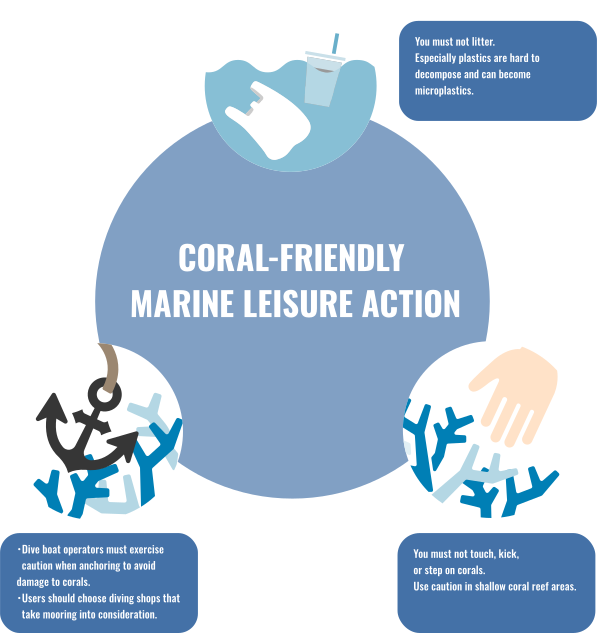
Roughly 30% of tourists visiting Okinawa come for marine leisure activities like scuba diving.
Increased tourism has resulted in more reports of coral damage due to improper use of popular snorkeling and diving sites. Irresponsible littering is also having an adverse impact on corals and reef dwellers.
Case Studies
Case studies of monitoring coral reef conditions and reducing impacts on coral reefs,
such as beach cleanups and the use of mooring buoys.
-
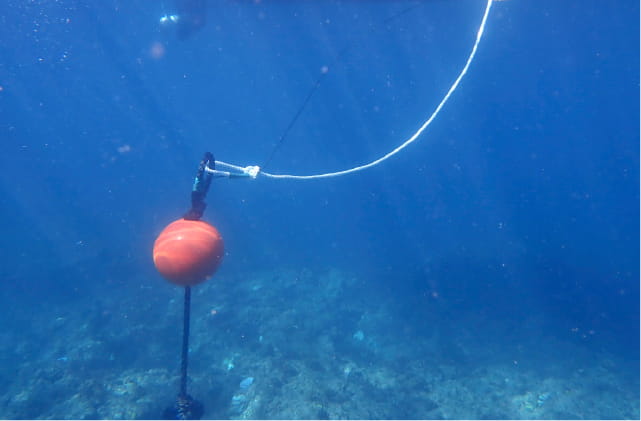
Avoiding Anchoring Impacts
Using designated mooring buoys secured to rocky bottoms to support responsible leisure activities.
-
*Buoy installation requires coordination with fishery cooperative association
-
-
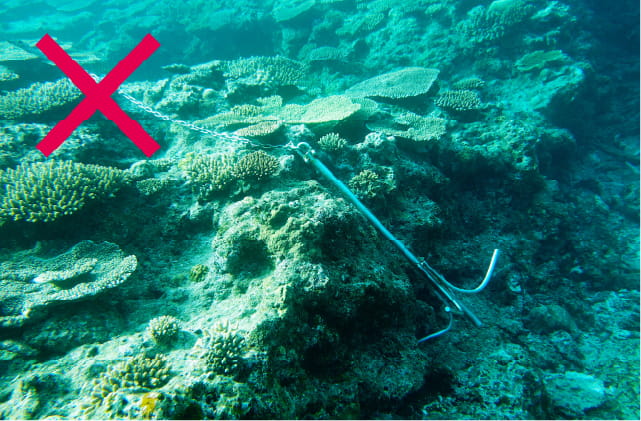
Think before Anchoring
Confirm seabed before anchoring to avoid damaging corals.
-
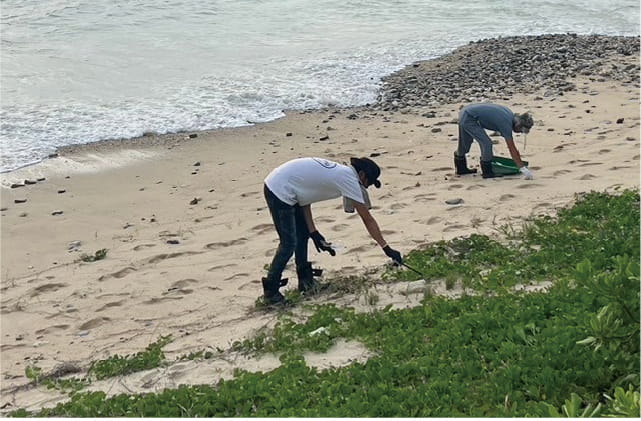
Ongoing Cleanup Operations
Marine leisure operators regularly conduct beach cleanups to reduce impacts on the coral reefs where they bring customers daily.
-
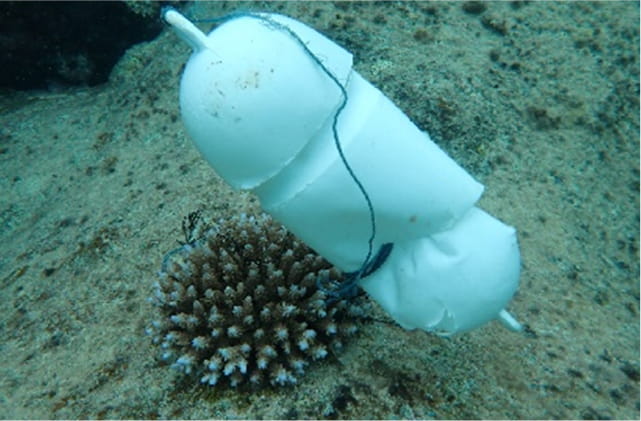
Underwater Cleanups
Removal of items tangled on corals
-
*Skills required for removal to avoid damages on corals.
-
-
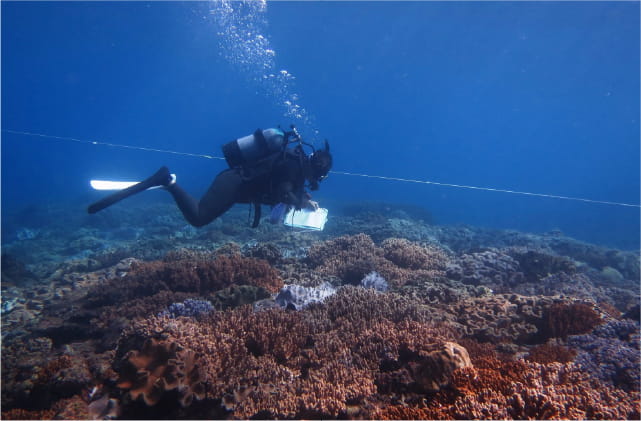
Coral Reef Monitoring
Continuous monitoring of coral reef conditions, including bleaching status, in areas where marine leisure operators conduct their activities.
-
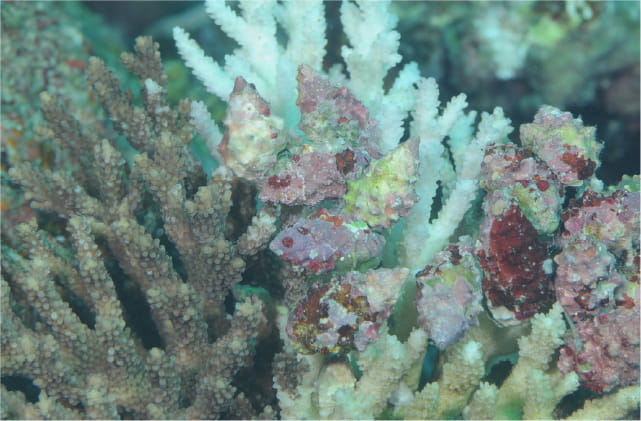
Monitoring Corallivores
Monitoring and removing crown-of-thorns starfish and coral-grazing gastropods like Drupella snails.
-
*Continuous monitoring is crucial
-
Know how marine leisure can affect coral reef ecosystems.
- SUN PROTECTION WITH
MINIMAL RISK TO CORAL -
Many details about the effects of sunscreen chemicals remain unclear. Wearing clothing like rash guards and hats is one of recommended ways to reduce risk to corals while protecting your skin.

- OBSERVING MARINE LIFE, NOT FEEDING THEM
-
Artificial feeding can alter fish feeding habits and behavior, causing biodiversity reduction and disrupt ecosystem balance. The international diving guidelines of Green Fins also prohibits feeding.
-
※This initiative is being implemented in Onna Village within the prefecture.

-
PARTNERSHIPS AMONG DIVE SHOPS SUPPORT
LOCALLY ROOTED MARINE LEISURE.
Considering the natural and local environment is essential for sustainable tourism. In Okinawa, marine leisure operators collaborate with local communities. Choosing dive association-affiliated organizations benefits the environment and local areas.
Map of Marine Leisure Organizations
※This list mainly features organizations of dive shops and similar businesses,
while other types of marine leisure organizations are in the area.
Information as of the end of January 2026.
Marine Leisure Business Federation of Okinawa (MBF)
Okinawa main island
Kerama Islands
Kume Island Aguni Island Tonaki IslandMiyako Islands
Miyako Islands Irabu Island Tarama IslandYaeyama Islands
Ishigaki Island Iriomote Island Hateruma Island Yonaguni Island-
Ie-island Diving Association
- Motobu Diving Association
- Onna Marine Association
- Miyakojima Marine Council・Collaborative framework of 5 dive associations and 3 fishery cooperatives
-
Miyako Island Sustainable Tourism Council
(Guideline-Certified Shops) - PCUA-approved Bora Kubakundai Cave shops
- Yaeyama Diving Association
-
Yaeyama Phantom Island Council
- PUCA-approved Shiraho Reef shops
- Isihigakijima Outfitter Union
- Taketomi Diving Association




References and others

- MBF represents the voice of the marine leisure industry, sharing field status, challenges, problems, and countermeasures with the assembly or government. It is a General Incorporated Association, brings together 12 marine business organizations, 360 businesses from Okinawa Island, Ie Island, Miyako Island, Ishigaki Island, and Iriomote Island and others.
- The business federation supports and collaborates across the entire project, helping raise public awareness through the website developed under the JFY2025 Okinawa Prefecture Coral Reef Conservation and Restoration Promotion Project led by the Department of Environmental Affairs.